KOMMO

KOMMO

Assisting the transition towards a more plant-based diet

Type

Type

Type

Individual student project at Loughborough University

Skills

Skills

Skills

Behaviour change strategies, creative research methods, UI & UX design
Duration

Duration

Duration

16 Weeks

16 Weeks

16 Weeks

PROBLEM

PROBLEM

As awareness grows regarding the link between food and health, one in eight UK young adults intends to adopt a plant-based diet (Raven, 2023).

However, changing diet is often perceived as a daunting experience

However, changing diet is often perceived as a daunting experience

💡

💡

💡

How might we make the transition towards a plant-based diet frictionless?

How might we make the transition towards a plant-based diet frictionless?

How might we make the transition towards a plant-based diet frictionless?

SOLUTION

SOLUTION

SOLUTION

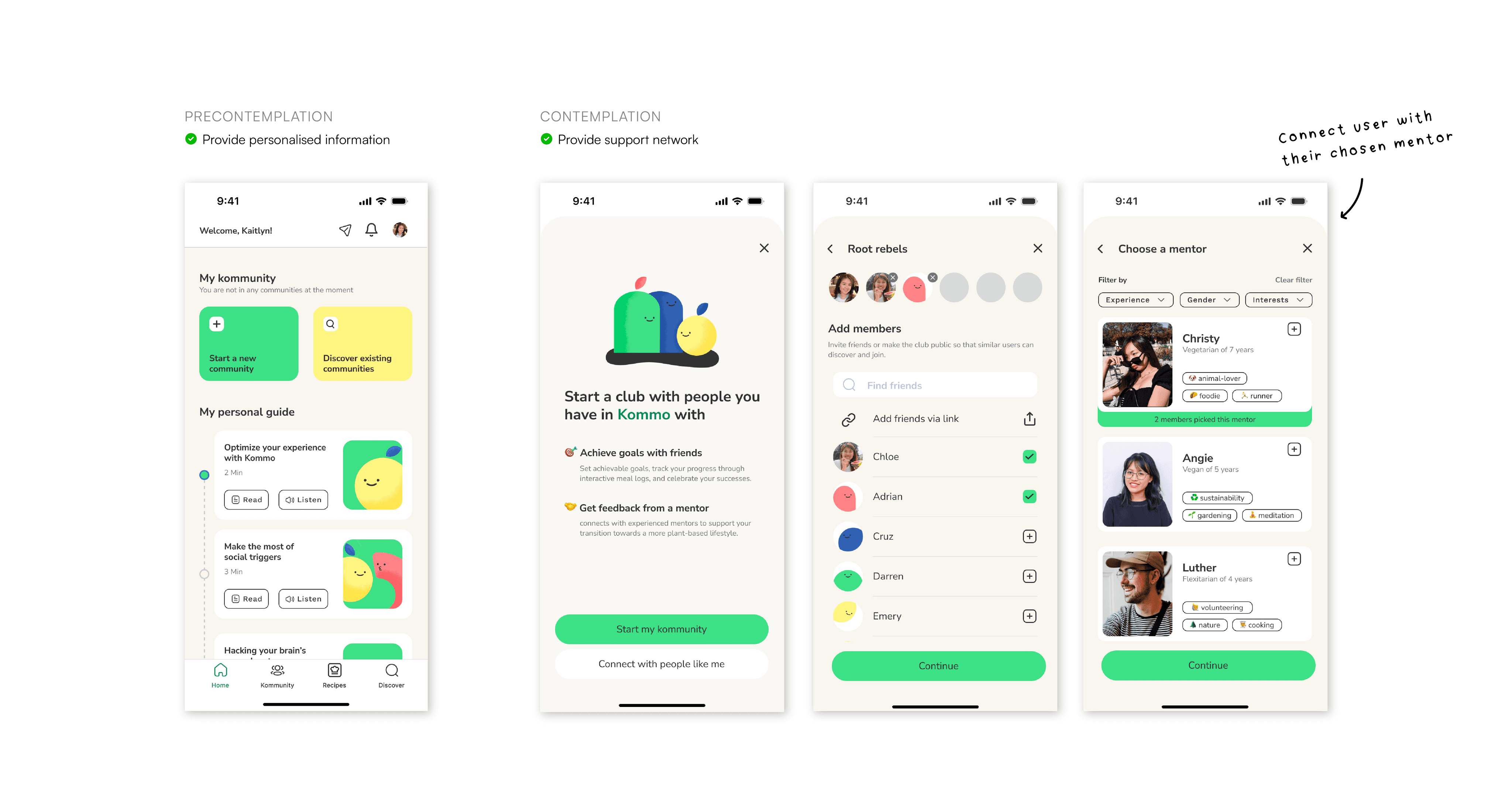
Bridging Users and Mentors for Behavioral Change

Bridging Users and Mentors for Behavioral Change

  • Receive feedback and guidance from mentors.

  • Benefit mentors by empowering them to maintain their diet through prescribing change

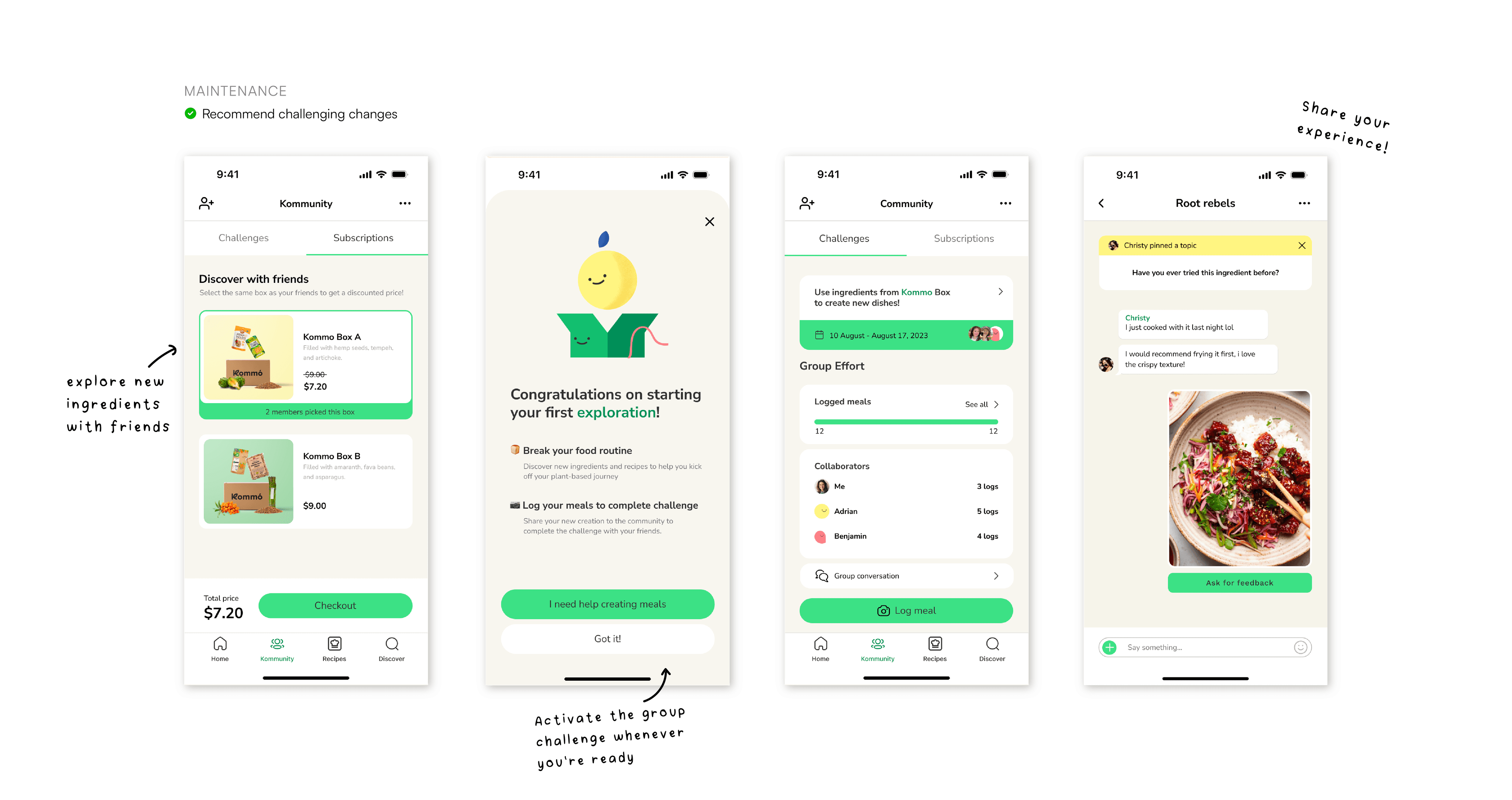
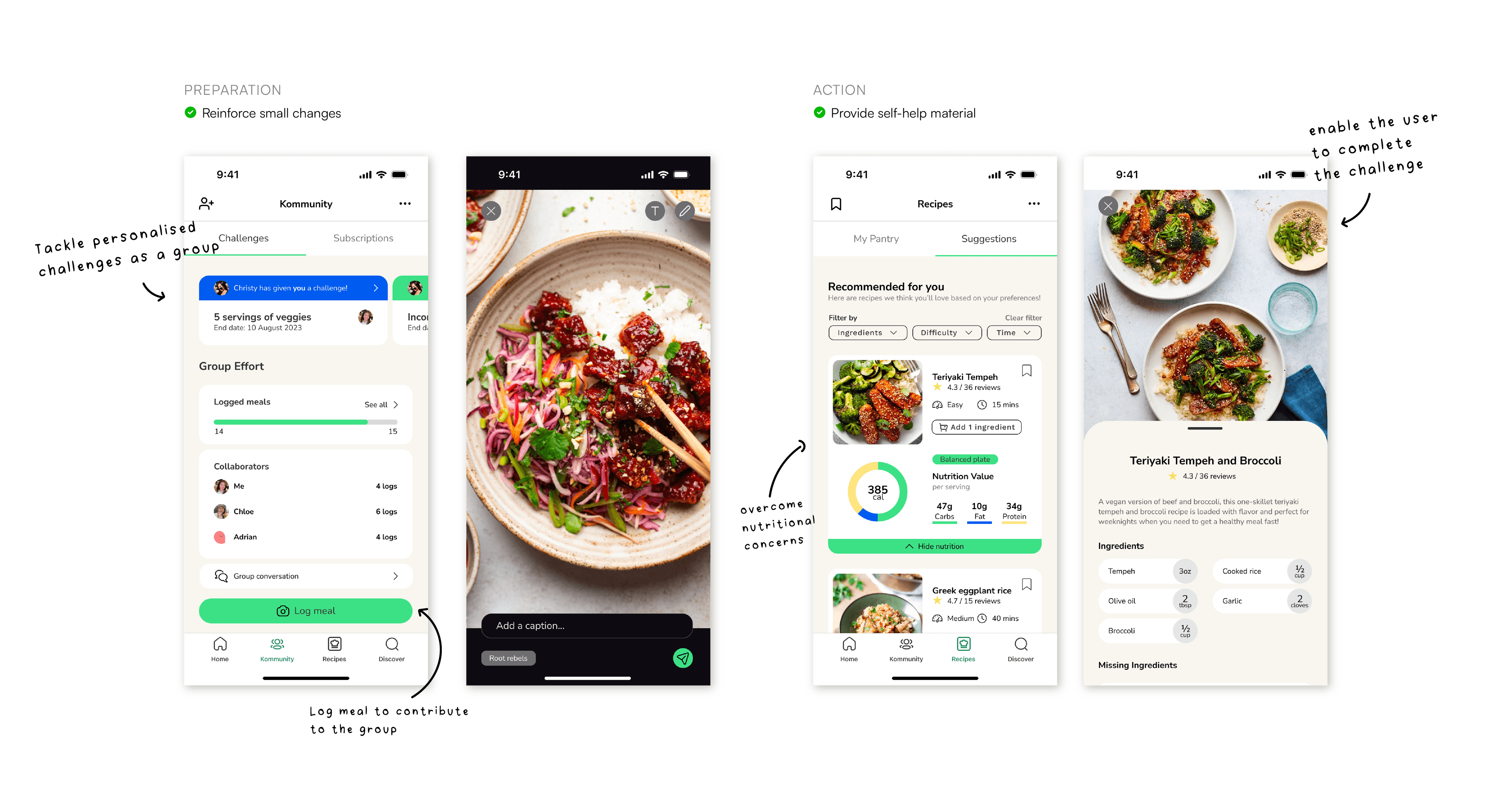
Complete personalised challenges collectively

Complete personalised challenges collectively

  • Log meals to contribute to the team.

  • Using social conformity as an extrinsic motivation.

Intelligent meal guide

Intelligent meal guide

  • Enable users to complete the given challenge.

  • Encourage trying new ingredients with personalised suggestions.

  • Overcome user's concerns about meeting their nutritional needs.

HOW I GOT THERE

HOW I GOT THERE

HOW I GOT THERE

Empathise

Autoethnography

Interviews (6)

A Day-In-The-Life

Define

Thematic Analysis

Insights

HMW

Vision Statement

Ideate

Crazy 8s

What Ifs

Divergent Ideas (3)

Co-Design

Prototype & Test

Storyboard

Roleplay

Wireframe

Experience Prototype

RESEARCH - FIRST PHASE

RESEARCH - FIRST PHASE

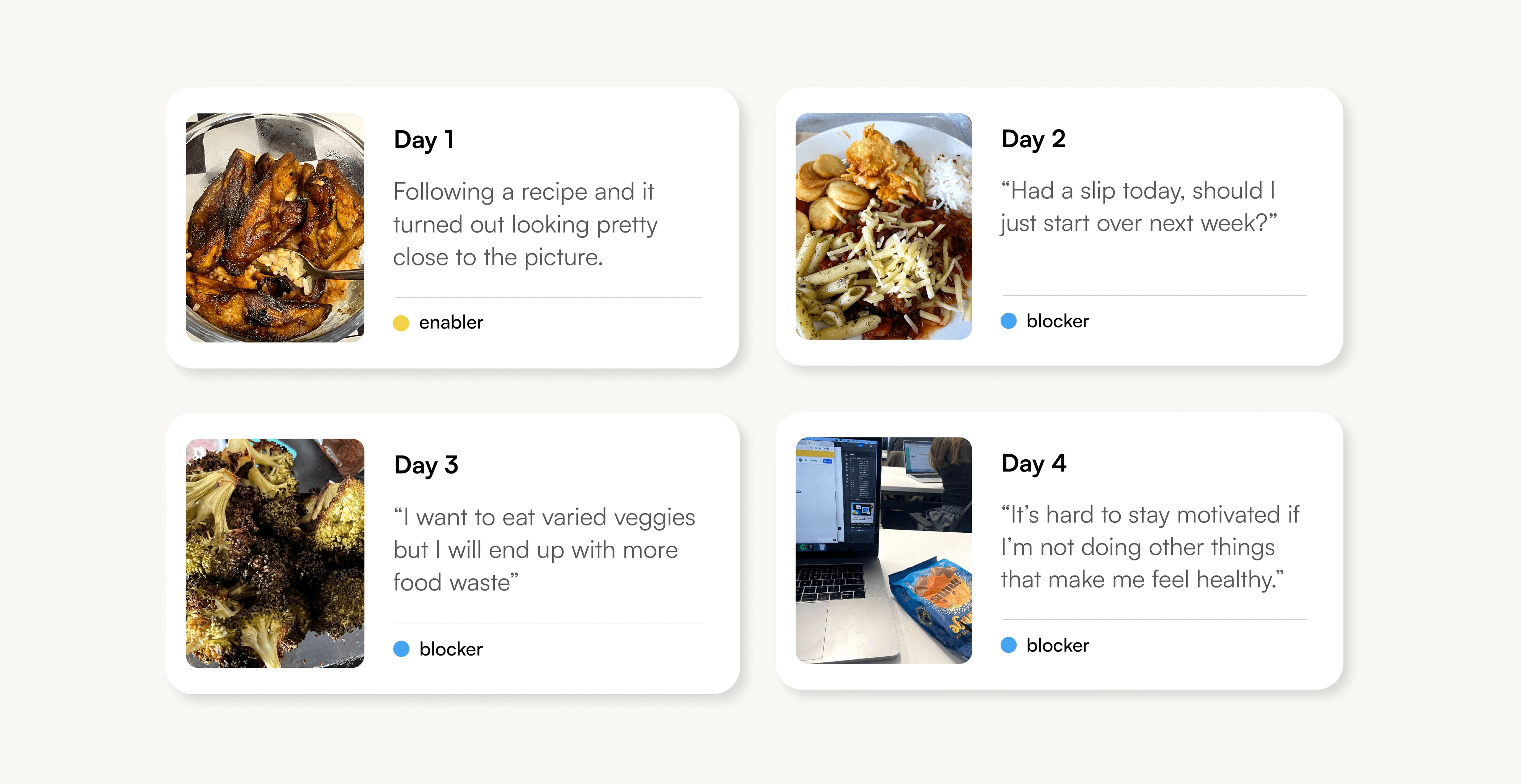
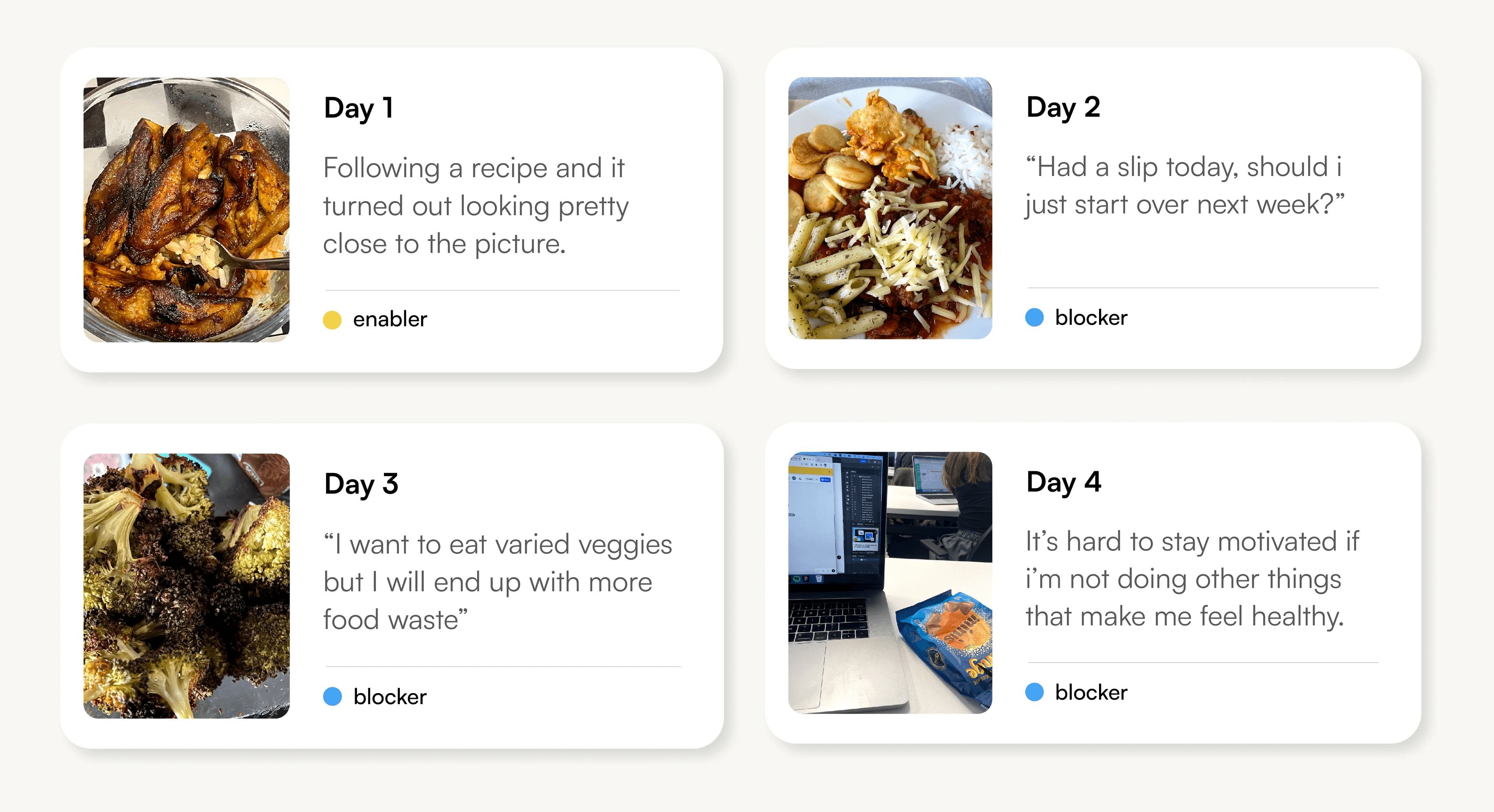
As I have never attempted a plant-based diet, I need a way to empathise with the target user.

As I have never attempted a plant-based diet, I need a way to empathise with the target user.

Method: Autoethnography

Therefore, I started my research by challenging myself to follow a plant-based diet for a week and documenting it. By experiencing the diet transition first-hand, I got to identify the enablers and blockers.
RESEARCH - SECOND PHASE

RESEARCH - SECOND PHASE

Challenging my personal perspectives

Challenging my personal perspectives

Method: Contextual interview and a day-in-the life study

It is crucial to get the user's perspective to validate the data I got previously, preventing personal biases. Therefore, I decided to delve deeper on my assumptions through contextual interviews.

To get more relevant data on how to make the transition frictionless, I asked the participant to eat a plant-based diet for a day and prompted them to report their experience through a messaging app.
DEFINE

DEFINE

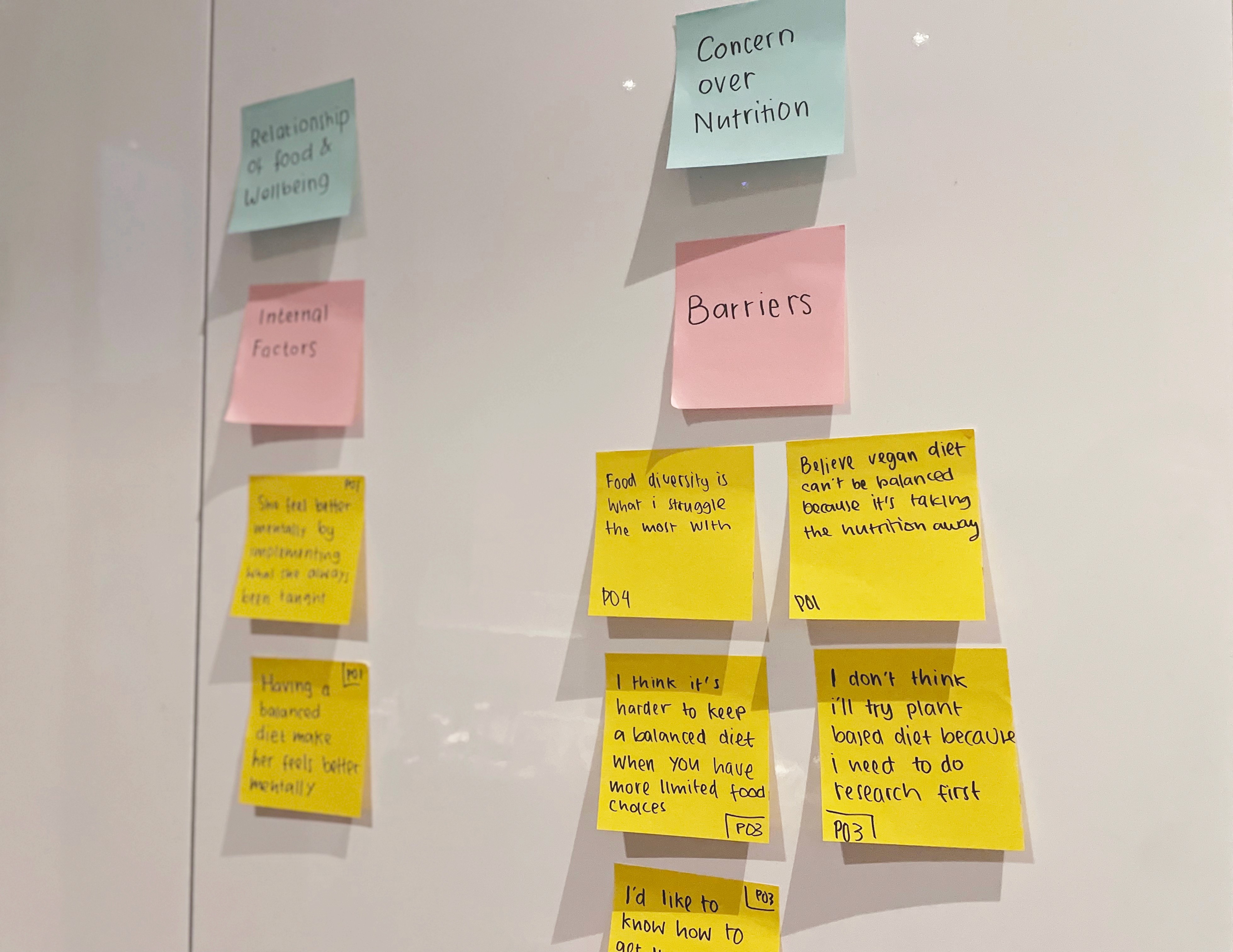
I first analysed the accumulated data with an empathy map to understand the user better before sorting the findings into an affinity diagram. Then, I question the meaning of the clustered findings to draw the following insights.

Insight 01

They feel better from eating a meal that "they believe" to be balanced.

They feel better from eating a meal that "they believe" to be balanced.

Why It Mattters?

This prevents dietary changes because, to them, removing meat feels like pulling the nutrition away.

Insight 02

What matters most is the feeling of being mindful of food choices, not the actual nutritional content.

Why It Mattters?

Address nutritional concerns through increased food awareness. Make users feel they have taken good care of themselves.

Address nutritional concerns through increased food awareness. Make them feel they have taken care of themselves.

Insight 03

Their tendency to get stuck in a repetitive diet causes them to feel excitement when breaking the routine.

Their tendency to get stuck in a repetitive diet causes them to feel excitement when breaking the routine.

Why It Mattters?

It feels exciting at the beginning, but then it becomes tedious. Therefore, it has to be a mundane-breaking experience throughout.
IDEATION

IDEATION

I created HMW statements with these insights, which I then used to ideate. I then came up with three divergent ideas. These spanned from connecting users to guide change, a psychology-based approach to diet change, and elevating the experience of meal-kit service.

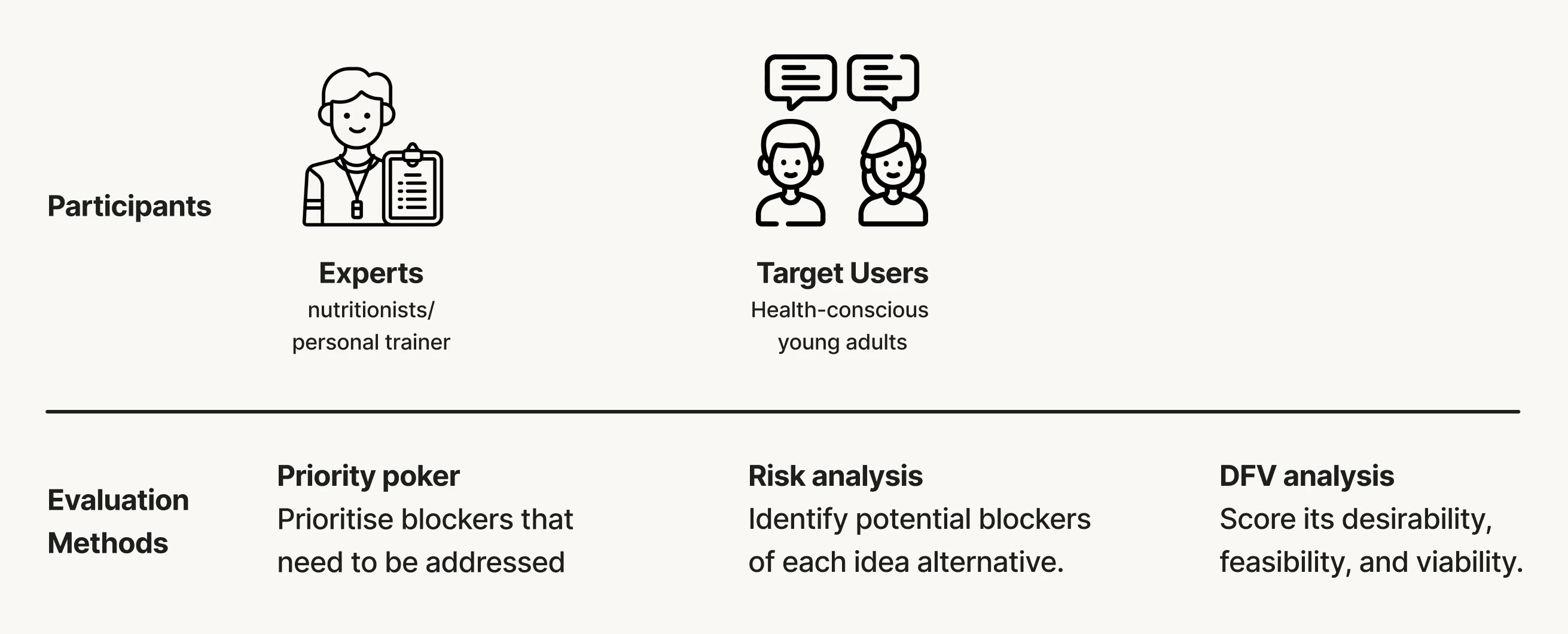
I explored these possible directions with experts and users to reveal blind spots.

I created HMW statements with these insights, which I then used to ideate. I then came up with three divergent ideas. These spanned from connecting users to guide change, a psychology-based approach to diet change, and elevating the experience of meal-kit service.

I explored these possible directions with experts and users to reveal blind spots.

I created HMW statements with these insights, which I then used to ideate. I then came up with three divergent ideas. These spanned from connecting users to guide change, a psychology-based approach to diet change, and elevating the experience of meal-kit service.

I explored these possible directions with experts and users to reveal blind spots.

INITIAL CONCEPT

INITIAL CONCEPT

I chose the concept that tackled the high-priority blockers and scored the highest in the DFV analysis, which takes me to the initial concept.

A platform to pair a beginner and an experienced user to set and tackle challenges together, enabling them to discover ingredients and then use them to create a balanced meal.

I chose the concept that tackled the high-priority blockers and scored the highest in the DFV analysis, which takes me to the initial concept.

A platform to pair a beginner and an experienced user to set and tackle challenges together, enabling them to discover ingredients and then use them to create a balanced meal.

I chose the concept that tackled the high-priority blockers and scored the highest in the DFV analysis, which takes me to the initial concept.

A platform to pair a beginner and an experienced user to set and tackle challenges together, enabling them to discover ingredients and then use them to create a balanced meal.

PROTOTYPE & TEST

PROTOTYPE & TEST

Method: Storyboard and experience prototyping
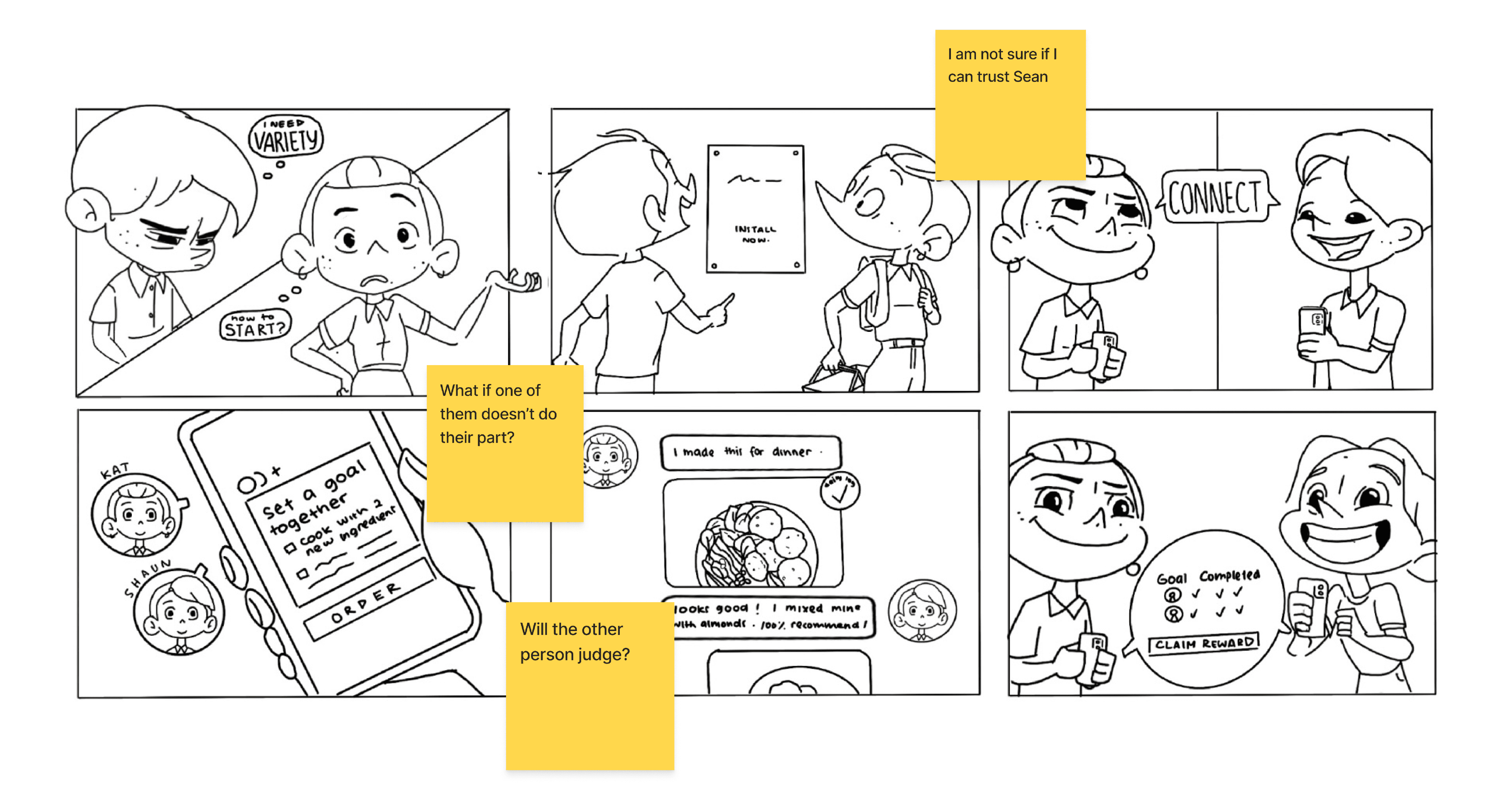
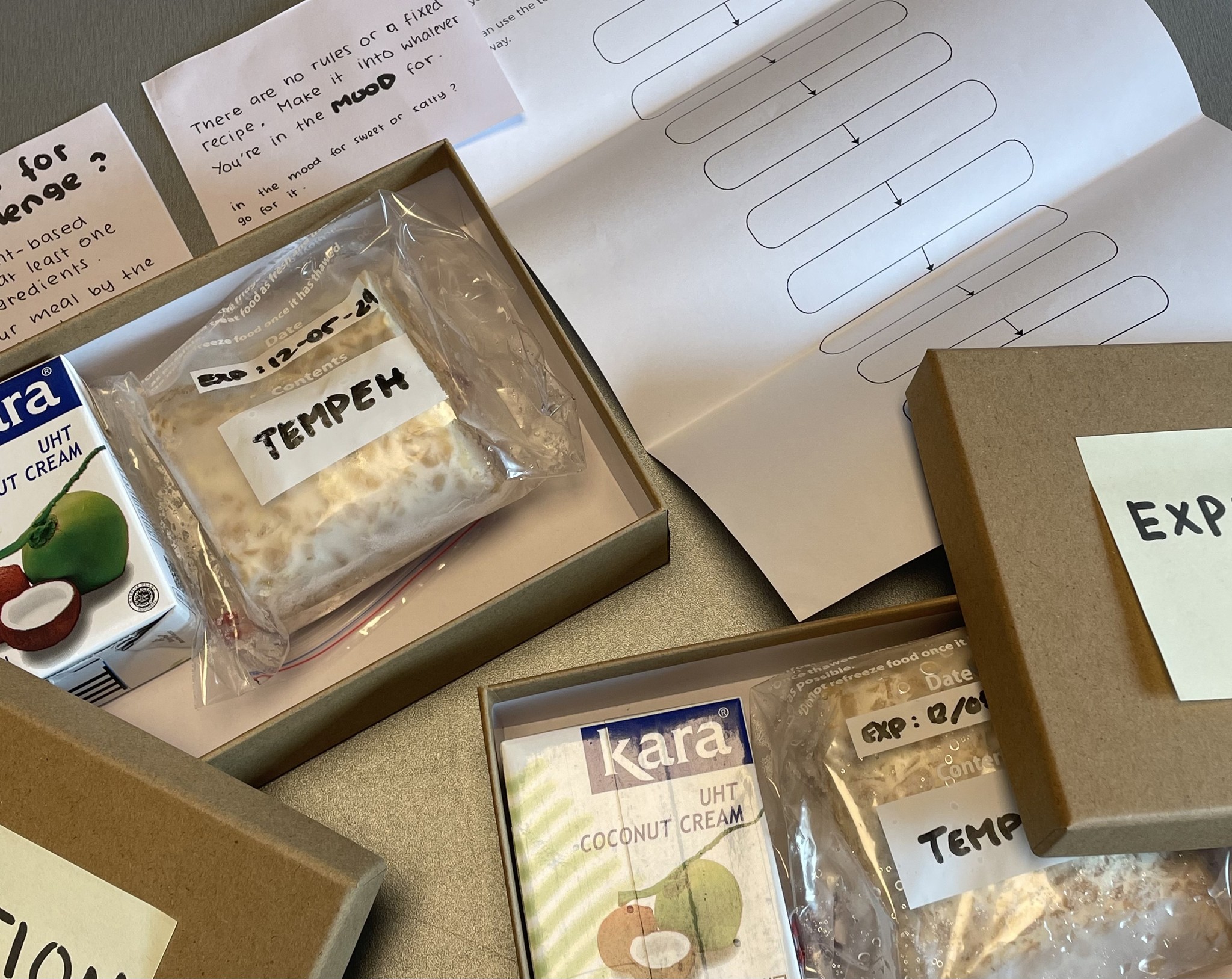
I first used a storyboard to get feedback on how the proposed solution affects their food choices. To help them better grasp the concept, I then simulated the experience by giving them a dietary challenge, providing them with the ingredients and a messaging platform.

I first used a storyboard to get feedback on how the proposed solution affects their food choices. To help them better grasp the concept, I then simulated the experience by giving them a dietary challenge, providing them with the ingredients and a messaging platform.

Yellow Post-it notes are the key feedback from the participant.

Yellow Post-it notes are the key feedback from the participant.

USER TESTING RESULT

USER TESTING RESULT

1

out of 2

Participants failed to complete the task

Due to varying personal goals, assigning the same task to both individuals resulted in one failing. For one of the participants, the task was far beyond their comfort zone.
KEY ITERATIONS

KEY ITERATIONS

Switching from pairing
to channels

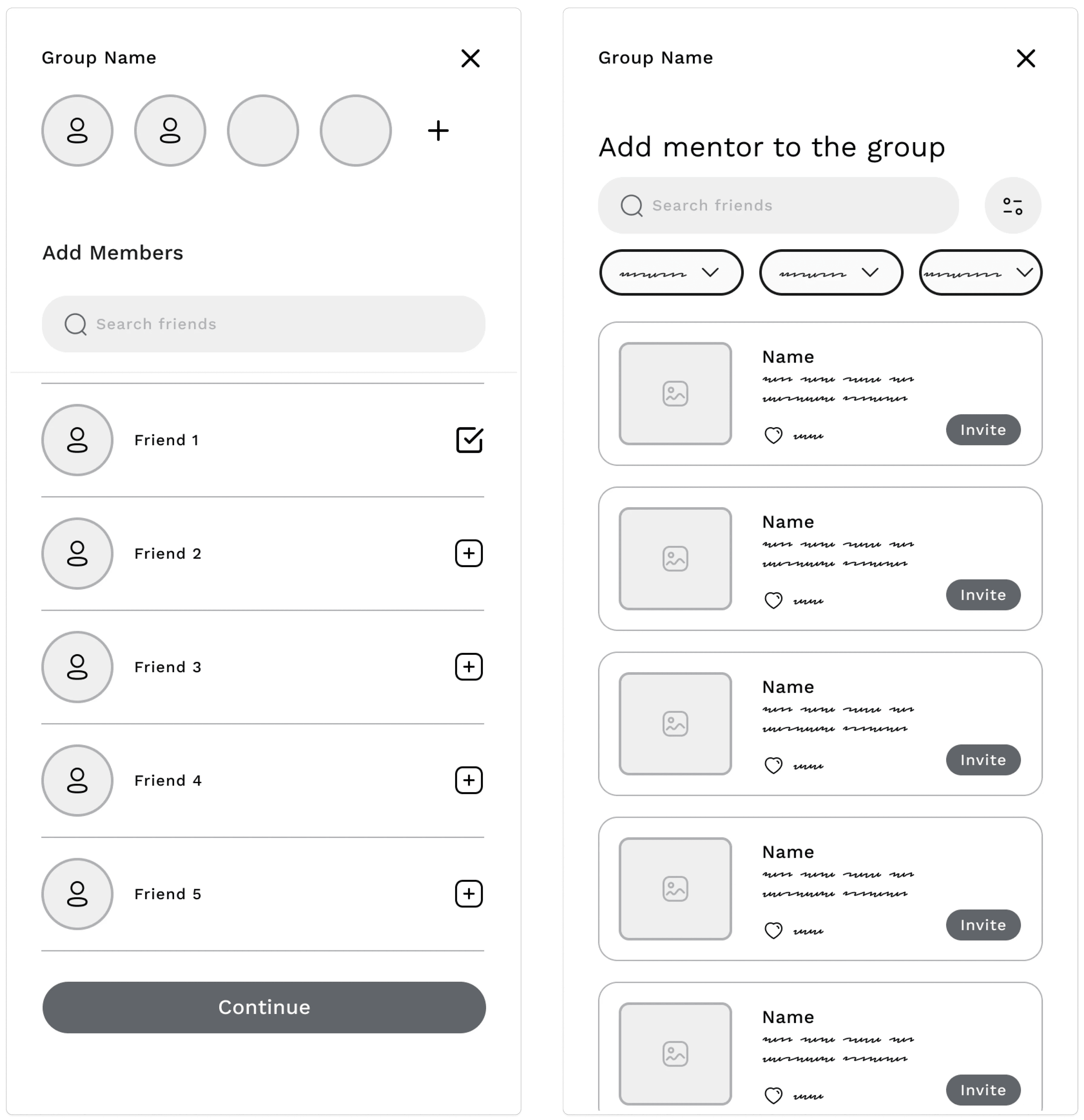
Pairing users can hinder progress when one is less engaged. To minimise this risk, I switched to a communication channel to connect a group of users and a chosen mentor.

Designing the challenge

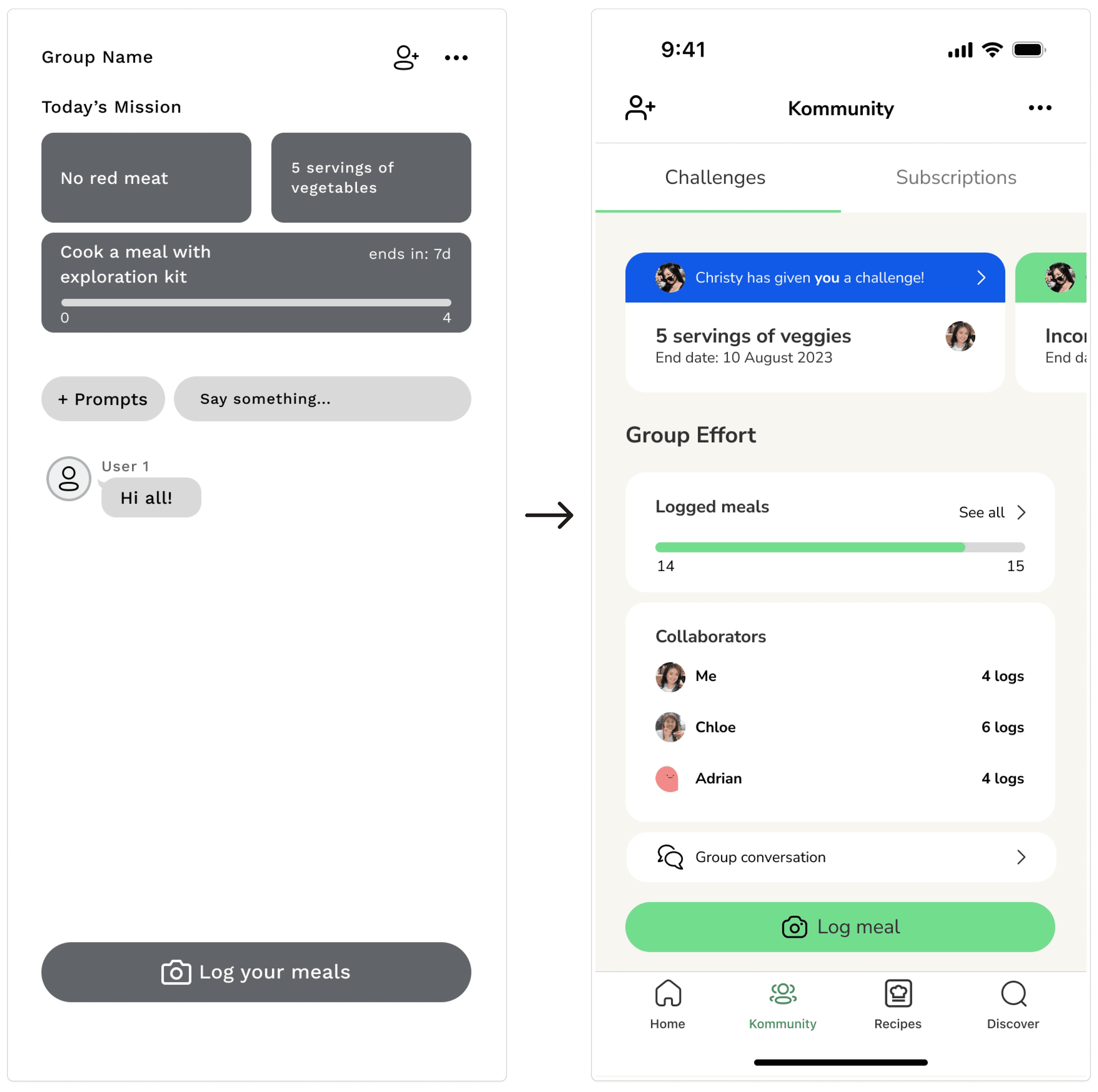
  • Allow users to get personalised challenges to increase each member's engagement.

  • The first task should require minimum effort, something they may have already achieved.

  • Limit the user to focus on one task at a time to prevent overwhelm.
Building the trust

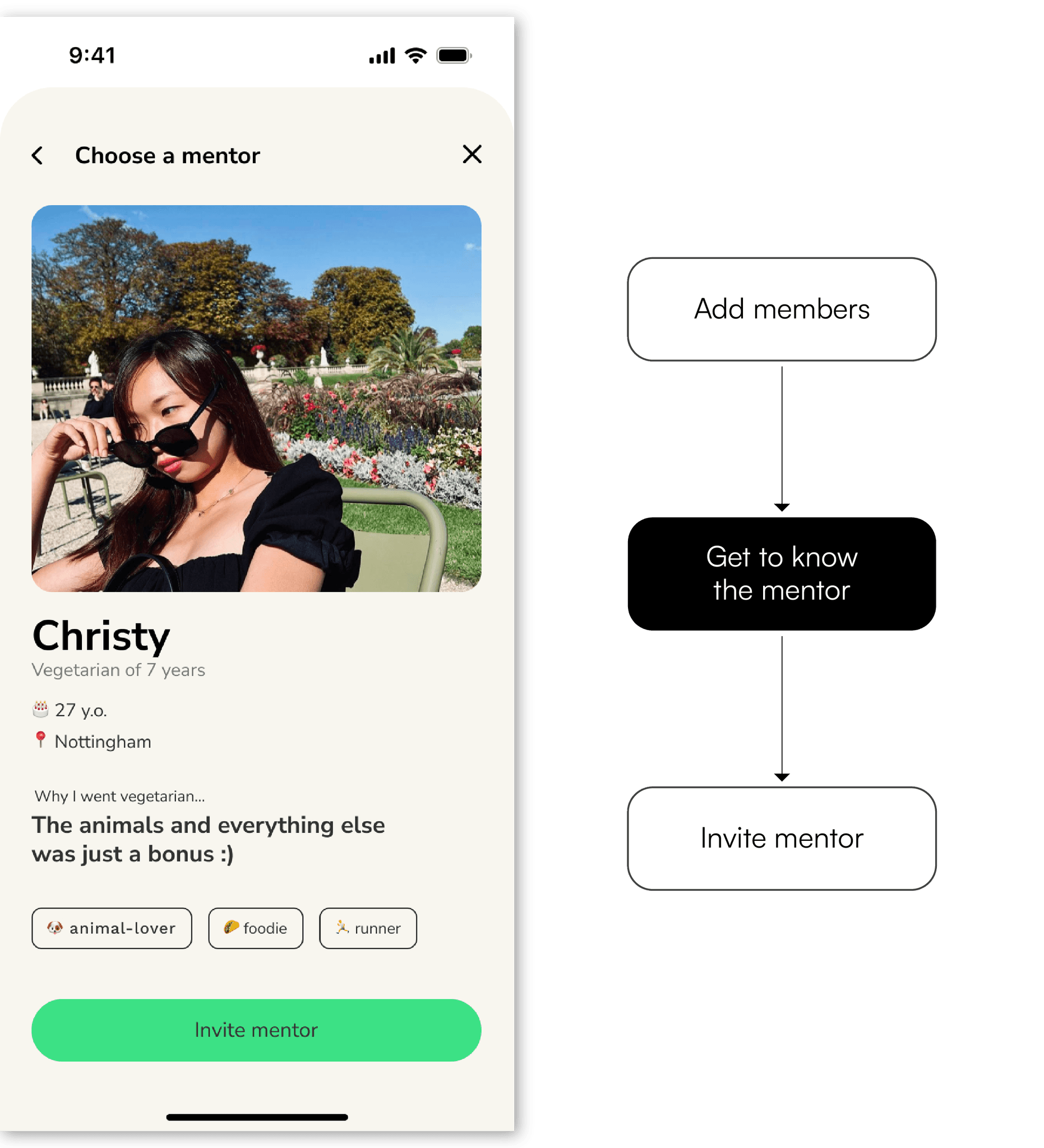
For this concept to work, the user needs to trust the mentor. To facilitate this, I added a page where users can get to know the mentor before selecting one.

EVALUATION

EVALUATION

To back up the long-term success while working within a short timeframe, I evaluated the product using a study by the American Dietic Association.
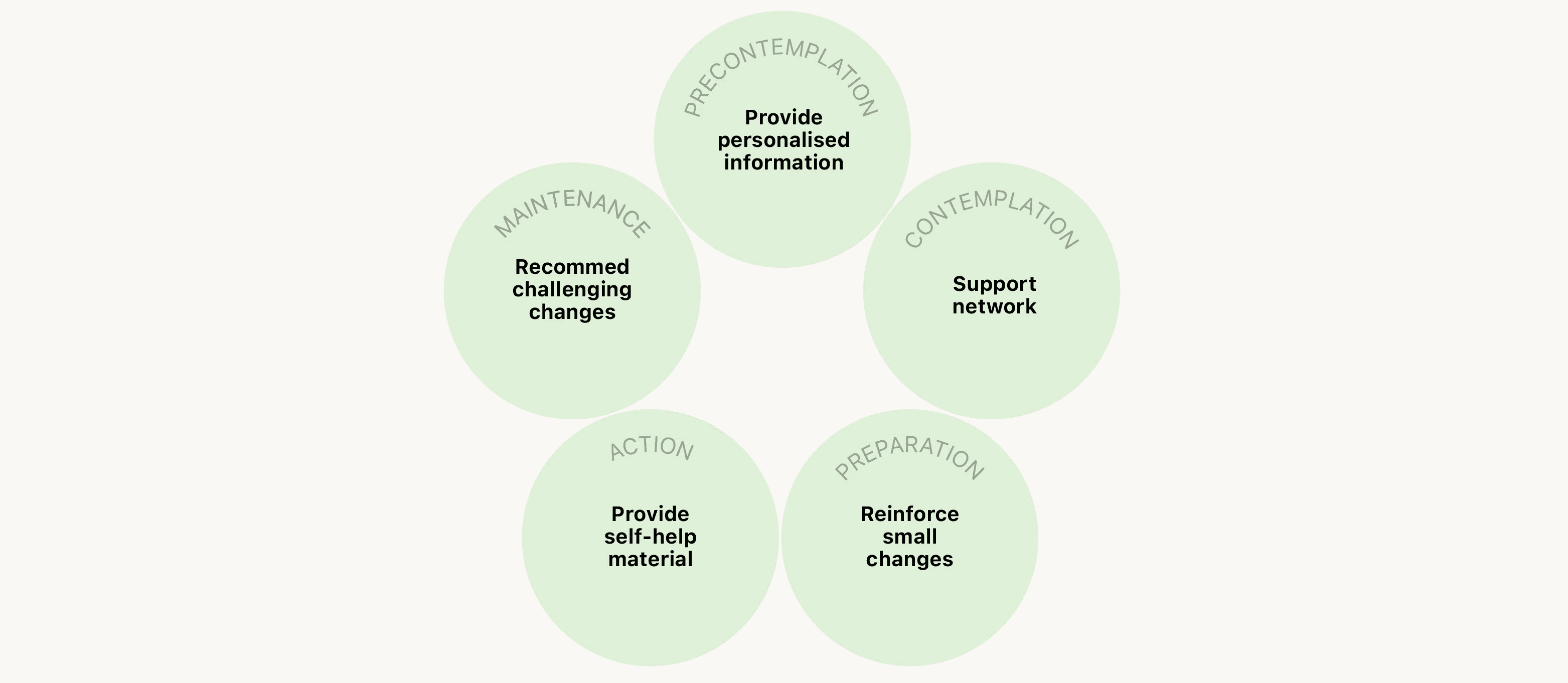
“A good dietary intervention should include a range of components appropriate for all stages.”


(Kristal et al., 1999)

“A good dietary intervention should include a range of components appropriate for all stages.”

(Kristal et al., 1999)

OUTCOME

OUTCOME

By ensuring that the product answers users' needs throughout the stages of change and iterating based on user feedback, here are the outcomes:

Outcome

86

System Usability Scale (SUS) score

Outcome

ꜛ50%

potential increase in task completion

Before the iteration, 1 out of the two participants failed to complete the task. Focusing on why the participant failed and iterating based on it can potentially lead to the success of both participants. However, further tests are required.
FINAL DESIGN

FINAL DESIGN

Reflection

Reflection

Reflection

This project is the first one that allowed me to be fully responsible for all aspects. On that note, a few things I've learned:

  • Involve the user and stakeholders sooner to minimise wasted efforts. I spent a lot of time developing ideas I thought would solve the problem, only to discover they had blind spots once I involved stakeholders and users.

    When the idea isn't ready to be presented to the user and stakeholders, I should use the persona to evaluate it. If it no longer fits into the narrative, I have to be brave to "kill" it.


  • There is no one formula, and the possibility is endless. Through this project, I've learned that frameworks and methodologies should be viewed as a guide, not a rigid rule. We have the freedom to explore beyond it as long as it aids in finding answers to our questions and solve the problems at hand.

This project is the first one that allowed me to be fully responsible for all aspects. On that note, a few things I've learned:

  • Involve the user and stakeholders sooner to minimise wasted efforts. I spent a lot of time developing ideas I thought would solve the problem, only to discover they had blind spots once I involved stakeholders and users.

    When the idea isn't ready to be presented to the user and stakeholders, I should use the persona to evaluate it. If it no longer fits into the narrative, I have to be brave to "kill" it.


  • There is no one formula, and the possibility is endless. Through this project, I've learned that frameworks and methodologies should be viewed as a guide, not a rigid rule. We have the freedom to explore beyond it as long as it aids in finding answers to our questions and solve the problems at hand.

This project is the first one that allowed me to be fully responsible for all aspects. On that note, a few things I've learned:

  • Involve the user and stakeholders sooner to minimise wasted efforts. I spent a lot of time developing ideas I thought would solve the problem, only to discover they had blind spots once I involved stakeholders and users.

    When the idea isn't ready to be presented to the user and stakeholders, I should use the persona to evaluate it. If it no longer fits into the narrative, I have to be brave to "kill" it.


  • There is no one formula, and the possibility is endless. Through this project, I've learned that frameworks and methodologies should be viewed as a guide, not a rigid rule. We have the freedom to explore beyond it as long as it aids in finding answers to our questions and solve the problems at hand.

References

References

References

Kristal, A.R. et al. (1999) ‘How can stages of change be best used in dietary interventions?’, Journal of the American Dietetic Association, 99(6), pp. 679–684. doi:10.1016/s0002-8223(99)00165-0.

Raven, P. (2023) How many Britons will attempt a vegan diet and lifestyle in January 2023? [online], YouGov.

Kristal, A.R. et al. (1999) ‘How can stages of change be best used in dietary interventions?’, Journal of the American Dietetic Association, 99(6), pp. 679–684. doi:10.1016/s0002-8223(99)00165-0.

Raven, P. (2023) How many Britons will attempt a vegan diet and lifestyle in January 2023? [online], YouGov.

Kristal, A.R. et al. (1999) ‘How can stages of change be best used in dietary interventions?’, Journal of the American Dietetic Association, 99(6), pp. 679–684. doi:10.1016/s0002-8223(99)00165-0.

Raven, P. (2023) How many Britons will attempt a vegan diet and lifestyle in January 2023? [online], YouGov.

Let's Connect